Twenty years in naval aviation will change the way you think about communication.
Not the talking part. The part where being clear under pressure is the difference between a controlled outcome and a bad one.
When I started Engage Video Production, I'd already spent fifteen years behind a camera. Wedding gigs in my twenties. Corporate work. A master's in production. My thesis film shot inside an abandoned mine that looked like a horror set. By the time I separated from the Navy, I knew the craft of video.
What I didn't know, what nobody told me, was how the civilian industry I was joining actually thought.
The Navy Chapter
I started enlisted.
Cryptographer on the EP-3. That's signals intelligence, flying in a four-engine turboprop, in conditions where what you wrote in the report and how you wrote it could change what happened in the next 24 hours. There was no margin for ambiguity. There was a margin for being wrong, but only if you were precisely wrong, in a way that could be corrected.
That work shaped how I think about communication more than anything else I've ever done.
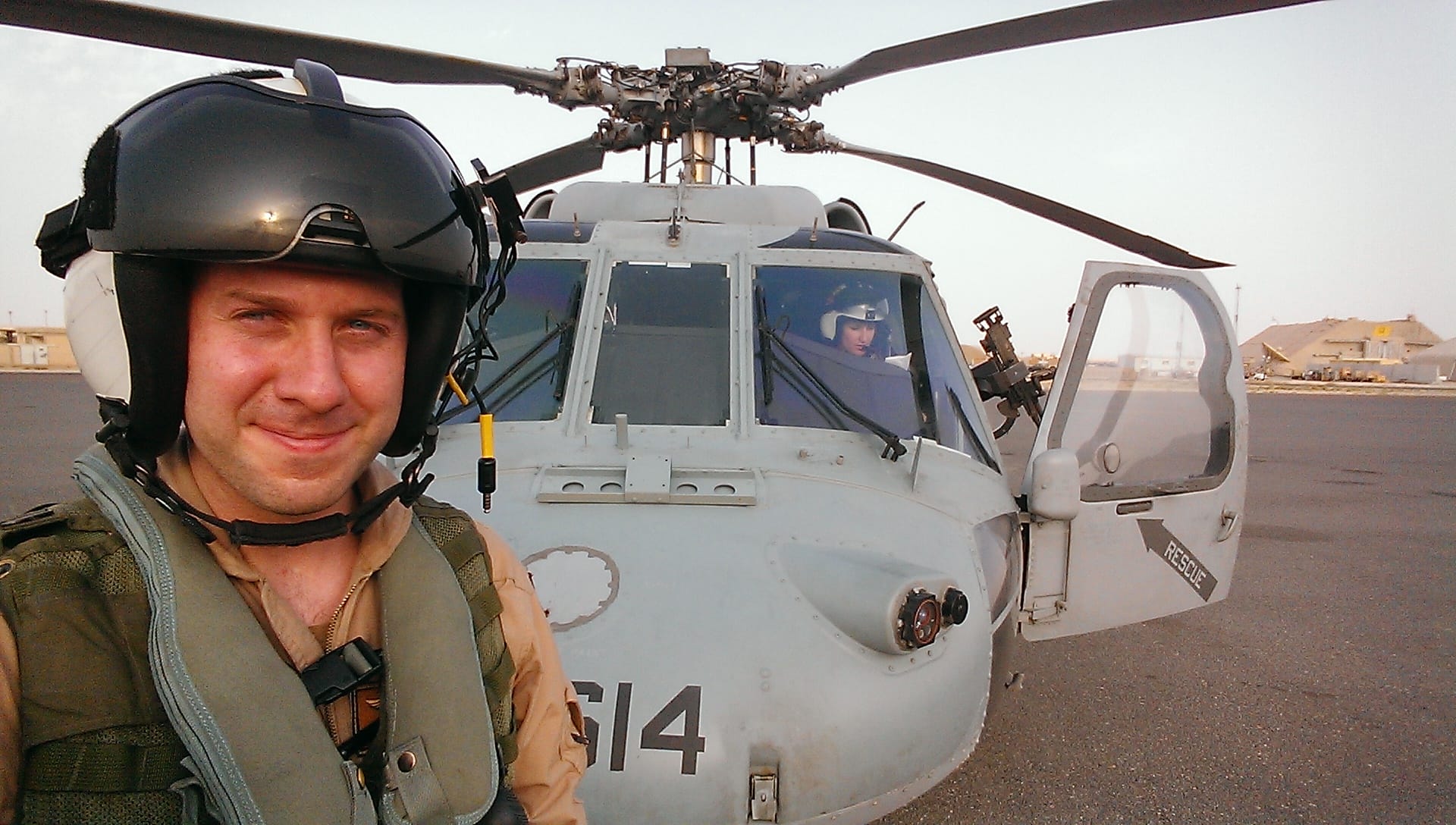
I commissioned as an officer and transitioned to the MH-60S Seahawk. Twenty years total. Helicopters, for the record, are better than jets.
In naval aviation, there's an expression you hear early and often: the NATOPS is written in blood. NATOPS is the procedural manual. The way you fly the aircraft. The checklists. The callouts. The emergency responses. Every line in it exists because somebody, somewhere, didn't follow it. Procedure isn't preference. It's a record of what went wrong before, written so it doesn't happen again.
You take that mindset into civilian life and it doesn't go away.
The Pivot
When I started looking at the video production industry from the inside, what I saw didn't add up.
Companies were spending real money on video that didn't work. Not because the video looked bad. Most of it looked great. It didn't work because nobody had stopped to figure out who it was for and what it actually had to do.
I watched an agency deliver a beautiful brand film to a technical client. The lighting was cinematic. The edit was sharp. The technical audience watched it once and quietly stopped trusting the company that paid for it. Because everything in the frame was almost right, and almost right is worse than wrong. Wrong gets corrected. Almost right gets ignored.
That gap, between production polish and operational credibility, is what I built Engage Video Production to close.
What Mission-First Actually Means
It's a phrase that could mean nothing. I take it seriously.
Mission-First means we start with what the work has to do, not what it has to look like. Visuals serve the mission. Story serves the mission. Production value serves the mission. The mission is whatever outcome the client actually needs, defined carefully before we touch a camera.
In practice, that shows up in four places.
Pre-production that looks like a flight plan.
We don't show up to shoot until we know the audience, the constraint, the failure mode, and the decision the video is supposed to drive. That alignment happens on the front end, in writing, before the budget is committed.
Subject matter expert handling that respects what they know.
Engineers and operators don't explain their work the way marketing teams want them to. That's not a flaw. It's a feature. Our job is to draw the signal out, not to script over it.
Delivery built for the room it's going to be watched in.
If the audience is a procurement officer, the video is built for procurement evaluation. If it's a technician on a maintenance line, the video has to survive being watched on a tablet next to an aircraft. We design for the watching environment, not the showroom.
Honest scope.
If we don't think a project is going to deliver, we'll tell you before we quote it. If we think the budget is wrong for the outcome, we'll tell you. If we think you're solving the wrong problem with video, we'll tell you that too.
That last one costs us work sometimes. We're okay with that.
The Personal Bit
I live in Fayetteville, Arkansas. I'm a cinema nerd from way back. My callsign was WOPO. Helicopters are still better than jets, and I'm prepared to defend that position.
If you've made it this far, you've probably figured out whether we're going to work well together. If we are, the next step is a conversation.