Aerospace & Aviation
How Video Turns Complex Aerospace Systems Into Clear, Credible Communication
By Ryan Williams · Published on January 06, 2026
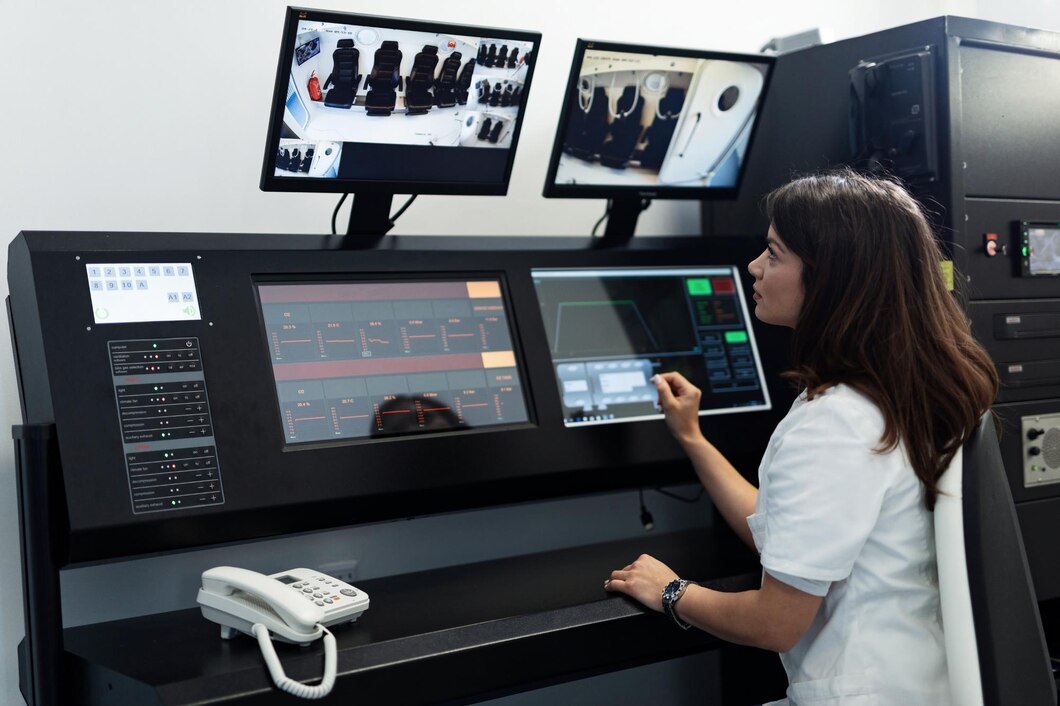
Aerospace and aviation technologies are among the most complex systems ever engineered. Advanced avionics, propulsion systems, unmanned aerial systems, and defense-grade platforms all share the same problem once they leave the engineering floor: the people who need to understand them span engineers, procurement teams, executives, and buyers, and each group needs a different level of depth from the same information.
Engineering teams need precision. Sales teams need clarity. Stakeholders need confidence. A single technical document rarely delivers all three, which is why aerospace organizations increasingly turn to video to close the gap between what a system does and what an audience actually understands.
This is where aerospace video production for complex technology earns its place, not as a marketing nice-to-have, but as a working communication tool.
Make Complex Systems Understandable to Every Stakeholder
Dense engineering language and static diagrams work fine for the people who wrote them. They fail almost everyone else. A manual that takes an engineer ten minutes to parse can take a procurement officer an afternoon, and by the time it's been passed between departments, interpretation has already started to drift.
Video solves this by layering the same core content for different audiences. The same system can be explained with technical depth for engineers, practical detail for operators, and strategic framing for executives, without producing three separate assets from scratch. A well-structured product feature and demonstration video can carry a technical layer and a business layer in the same production, so both audiences walk away with what they actually needed.
Standardize Training Across Distributed Engineering and Operations Teams
Large aerospace organizations rarely train everyone in the same room. Different instructors explain the same procedure slightly differently, shift changes introduce gaps, and the version of a process that gets taught in one facility doesn't always match another. In an industry where safety and compliance depend on consistency, that variation is a real liability.
Training video production and instructional video production remove that variability. A recorded procedure is the same procedure every time it's watched, whether it's a new hire's first week or a veteran technician's recertification. Standardized video training:
- Reduces reliance on any one instructor's interpretation
- Creates an auditable, repeatable record for compliance reviews
- Lets teams retrain on a specific step in minutes instead of scheduling a session
Accelerate Technical Validation and Sales Conversations
Selling into aerospace and defense means proving a system works before anyone commits budget or approval. Written specs and static renderings ask a buyer to imagine performance. Video shows it.
For technologies like UAS platforms, counter-UAS systems, and advanced composites, a product demonstration video lets technical evaluators see the system operate and lets procurement teams see deployment and cost in the same asset, rather than two separate meetings reaching two separate conclusions.
Replace Bulky Manuals With Visual Technical Walkthroughs
Written manuals are still necessary in aerospace, but they were never built to be the primary way most people learn a system. For distributed or global teams working from a translated PDF, a step-by-step visual walkthrough communicates the same information faster and with far less room for misinterpretation.
Video manual production supplements or replaces sections of traditional documentation with footage that shows exactly what a technician should see and do, in the exact sequence they'll encounter it on the floor.
Strengthen Brand Perception at Trade Shows and Investor Meetings
Even in a highly technical industry, how your company is perceived still shapes outcomes. A crowded trade show floor, a competitive investor pitch, and a recruiting page all reward the organizations that can communicate confidence clearly and quickly.
Marketing video production and brand video production support this without oversimplifying the underlying technology. And for facilities, infrastructure, or large-scale operations, drone video production adds a sense of scale and capability that ground footage alone can't capture, often in less time than a full facility tour would take to film conventionally.
Present Innovation With Clarity to Investors and Leadership
Investor and stakeholder communication carries its own version of this same problem: the people writing the checks or setting strategy are rarely the people who built the system, and their confidence depends on understanding it well enough to defend the decision internally.
A clear, well-produced video gives leadership something they can actually use in a board meeting or an investor update, rather than a technical brief they have to translate on the fly. When paired with a masterclass video production series, this becomes even more valuable for organizations that need to package deep technical expertise into a structured, repeatable format for ongoing stakeholder education rather than a single one-off presentation.
A Practical Example
A company developing a counter-UAS detection system needed to explain it to two very different audiences within the same sales cycle: technical evaluators who wanted to see the detection logic in action, and procurement teams who wanted to understand deployment, timelines, and cost. Rather than building two separate presentations, a single product demonstration video was structured with a technical layer and a business layer, letting both audiences pull what they needed from one asset. That structure cut real time off the evaluation timeline and meant the technical team and the procurement team were working from the same understanding of the system, instead of two different summaries of it.
(Illustrative - based on patterns we see across aerospace and defense engagements, not a specific named client. If you'd like this swapped for a real EVP case study, let us know which project to feature.)
Common Mistakes in Aerospace Video Production
- Oversimplifying a system to the point where technical viewers stop trusting it, because it no longer matches what they know to be true
- Prioritizing visuals that look impressive over visuals that are accurate, which wins a first impression and loses credibility the moment an engineer asks a follow-up question
- Leaving engineers and subject matter experts out of scripting, which almost always produces content that sounds right but isn't quite correct
- Skipping compliance and confidentiality review before filming, creating avoidable risk in an industry that takes it seriously
- Producing one video and expecting it to serve every audience, when the same footage could often be edited into three purpose-built versions instead
Our Process
- Discovery and technical alignment - define goals, audience, and use case with direct input from your engineers and stakeholders, not just your marketing team
- Strategic scripting - translate the system into a narrative that holds up under technical scrutiny
- Storyboarding - map live-action, animation, and overlay needs before a camera rolls
- Production and animation - capture real environments where possible, and build detailed animation where a camera can't go
- Review and validation - your team reviews for technical accuracy before anything is finalized
- Deployment - format the finished video for training, sales, and marketing use, so one production serves multiple purposes
Why Work With EVP
Generic production experience doesn't transfer cleanly to aerospace and defense work. It takes technical fluency, comfort with confidentiality and compliance requirements, and the discipline to represent a system accurately rather than just attractively.
As a veteran-led production company, Engage Video Production brings direct, firsthand familiarity with the standards and constraints of aerospace, defense, and first-responder environments. That shows up in the small things as much as the big ones: how we handle pre-production security questions, how we script around what can and can't be shown on camera, and how seriously we take a "no" from your compliance team the first time we hear it.
Frequently Asked Questions
Ready to Turn Your Technology Into a Clear Story?
Precision matters in aerospace, both in your engineering and in how you communicate it. If your team needs to explain a complex system to engineers, buyers, or investors, we'd like to hear about it.
Schedule a Discovery Call